
)
The directive has come down from the city council: “We need to green our fleet.”
For fleet managers across Canada, this phrase is both exciting and daunting. We are currently witnessing the most significant shift in transportation technology since the internal combustion engine replaced the horse. But for municipalities operating heavy-duty transit buses, emergency vehicles, and street sweepers, electrification is vastly more complex than buying a Tesla for personal use.
You aren’t just buying a vehicle; you are fundamentally changing how your depot operates, how your mechanics work, and how you plan routes.
At City View Specialty Vehicles, we recognize that the transition to zero-emission vehicles (ZEVs) is a marathon, not a sprint. It requires navigating a complex landscape of emerging technology, significant infrastructure investment, and the harsh realities of Canadian geography. This article serves as a roadmap designed to move your municipality from “mandate” to operational reality.
Executive Summary: Key Points
- The Shift is Inevitable: Federal mandates and community pressure mean electrification is no longer an “if” but a “when” for Canadian municipalities.
- Infrastructure First: Buying the vehicles is secondary to establishing a robust charging infrastructure. Depot planning needs to happen years before vehicle delivery.
- The Canadian Cold Factor: Winter impacts range significantly. Success requires realistic route modeling, pre-heating protocols, and choosing vehicles designed for northern climates.
- TCO Over Sticker Price: While the upfront cost of electric specialty vehicles is higher, the Total Cost of Ownership (TCO) is often lower due to reduced fuel and maintenance costs over the asset’s life.
- Start with Niche Applications: Transitioning doesn’t mean replacing every diesel transit bus overnight. Starting with smaller community shuttles (like para-transit) or electric street sweepers is a proven pilot strategy.
The Driving Forces Behind Municipal Electrification
Before diving into the “how,” it is crucial to understand the “why.” The pressure on municipalities to decarbonize is coming from multiple directions.
Federally, Canada has set ambitious targets for zero-emission vehicle sales, cutting across all weight classes. Provincially and municipally, climate emergency declarations are forcing the hands of procurement departments.
Furthermore, funding is now available to soften the blow. Programs like the federal Zero Emission Transit Fund (ZETF) offer billions in funding to help cover the capital costs of electric buses and the necessary infrastructure. If your city isn’t applying for these funds, you are leaving money on the table that another municipality will utilize.
Addressing the Elephant in the Room: Canadian Winters and Range
Whenever we discuss electric specialty vehicles with Canadian fleet managers, the first question is always the same: “What happens when it hits -30°C?”
It is a valid concern. Chemical batteries prefer the same temperatures humans do (around 20°C). Extreme cold slows down the chemical reactions, reducing available power. Furthermore, heating a large transit bus or shuttle cabin draws a large amount of energy directly from the high-voltage battery, slashing operational range—sometimes by as much as 30% to 40%.
The Mitigation Strategy
Ignoring winter isn’t an option. You must plan for it.
- Pre-Conditioning: The most critical strategy is “pre-heating” the vehicle while it is still plugged into shore power at the depot. This ensures the battery pack and cabin are up to temperature using grid electricity before the wheels turn, preserving onboard battery capacity for driving.
- Conservative Route Modelling: Never plan routes based on a manufacturer’s “max advertised range.” Routes must be modelled based on worst-case scenario winter days, including heavy accessory usage (heaters, defrosters, wipers).
- Diesel Auxiliary Heaters: Some municipalities opt for a hybrid approach in extreme climates, using small diesel-fired heaters for cabin warmth to spare the battery, though this does technically compromise a “zero-emission” status.
Beyond the Vehicle: Infrastructure is 50% of the Battle
A common mistake in early adoption is ordering vehicles before securing the infrastructure. A heavy-duty electric bus or sweeper cannot simply be plugged into a standard 110V wall outlet.
Your depot will require significant utility upgrades to handle high-voltage DC fast charging. This involves coordination with your local utility provider early in the process. You must determine if your grid connection has the capacity to charge 10, 20, or 50 buses simultaneously overnight.
According to reports from the National Renewable Energy Laboratory (NREL), infrastructure costs can sometimes equal the cost of the pilot fleet. Smart charging software is also essential to manage electrical loads, ensuring vehicles charge during off-peak hours to avoid massive utility demand charges.
Spotlighting Solutions: Starting Smart with Niche Vehicles
Transitioning doesn’t have to mean replacing your entire 40-foot transit fleet tomorrow. Many successful municipalities start with smaller, high-impact pilots.
The Community Shuttle / Para-Transit Option
Vehicles used for community transport, such as para-transit or senior center shuttles, are excellent candidates for early electrification. They typically operate on predictable, shorter routes and return to base frequently.
We are particularly excited about platforms like the Optimal EV. This isn’t just a repowered gasoline chassis; it is purpose-built as a low-floor electric shuttle. It offers the durability required for municipal duty cycles while providing a zero-emission footprint for vulnerable community members.
👉 Explore our Electric Shuttle Options
Electric Street Sweepers
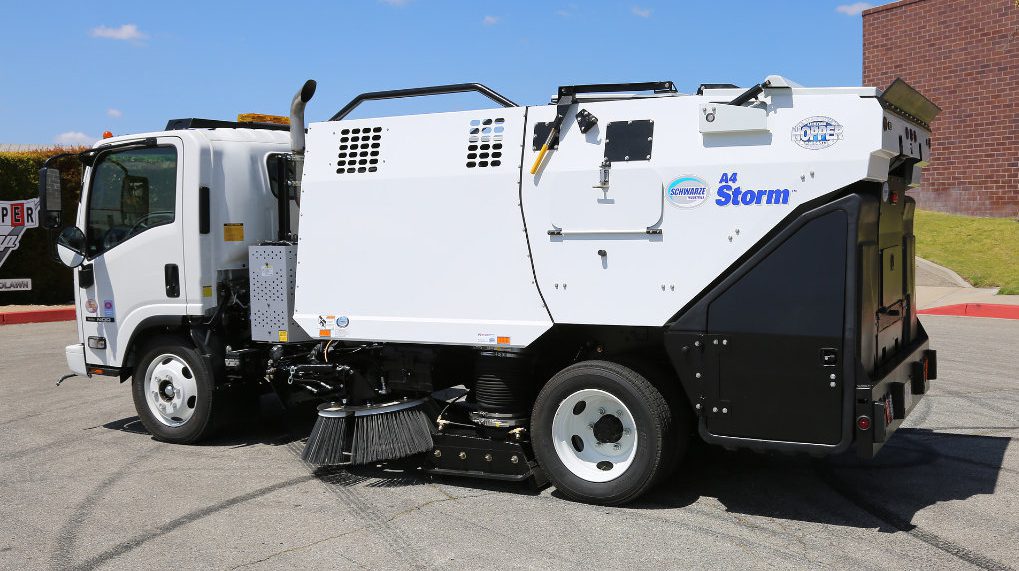
Street sweepers are another prime target. They are noisy, pollute heavily due to their auxiliary engines, and operate at low speeds in dense urban areas—exactly where EVs thrive. An electric sweeper runs silently, dramatically improving residents’ quality of life during early-morning cleaning operations.
👉 View our Street Sweeper Inventory
The Total Cost of Ownership (TCO) Shift
The sticker price of a heavy-duty EV is undeniably higher than its diesel counterpart—sometimes double. Procurement officers need to look beyond capital expenditure (CapEx) and focus on Operational Expenditure (OpEx).
- Fuel Savings: Electricity costs are generally lower and more stable than volatile diesel prices.
- Maintenance Reduction: An internal combustion engine has thousands of moving parts. An electric motor has very few. No oil changes, no transmission fluid flushes, no exhaust aftertreatment systems (DPF/DEF), and significantly reduced brake wear due to regenerative braking.
Over a 12-year lifecycle, these OpEx savings can offset the initial higher purchase price. Studies by organizations like BloombergNEF consistently show that heavy-duty EVs are rapidly approaching TCO parity with diesel in many use cases, even before factoring in government subsidies.
Your Partner in Transition
Electrifying a municipal fleet is a massive undertaking involving stakeholders from finance, operations, city planning, and utility providers. You need a vendor who understands more than just the spec sheet.
At City View Specialty Vehicles, we help you navigate the entire ecosystem. From selecting the right chassis for your specific climate to advising on parts availability and service training for your mechanics, we are committed to the long-term success of your green fleet initiatives.
👉 Contact City View Today to Discuss Your Fleet
Frequently Asked Questions (FAQs)
Q: How long does it take to charge an electric municipal bus or shuttle?
A: Charge times vary wildly based on battery size and charger output. A Level 2 charger might take overnight (8-12 hours) for a smaller shuttle. A high-powered DC Fast Charger (150kW+) can recharge a large transit bus in 2 to 4 hours. Most depots utilize overnight charging to manage utility costs.
Q: Are electric vehicle batteries recyclable at the end of their life?
A: Yes, and this industry is growing rapidly. Heavy-duty EV batteries contain valuable metals like lithium, cobalt, and nickel. Companies like Li-Cycle (a Canadian company) are pioneering high-efficiency recycling processes to recover these materials for new battery production.
Q: Do our mechanics need special training to service high-voltage vehicles?
A: Absolutely. Safety is paramount when dealing with high-voltage systems (often 400-800V). Your technicians will require specialized training on high-voltage safety protocols, personal protective equipment (PPE), and new diagnostic tools.
👉 Learn more about our Service & Training
Q: Is the electrical grid ready for everyone to switch to electric buses?
A: In most areas, the generation capacity exists, but local distribution infrastructure (the wires to your depot) may need upgrades. This is why early engagement with your local utility is critical. Organizations like Electric Mobility Canada provide excellent resources on grid readiness and policy.
Q: Should we buy through a cooperative purchasing group?
A: Cooperative purchasing programs can significantly streamline the procurement process for EVs, saving time on lengthy RFP processes while ensuring compliance.